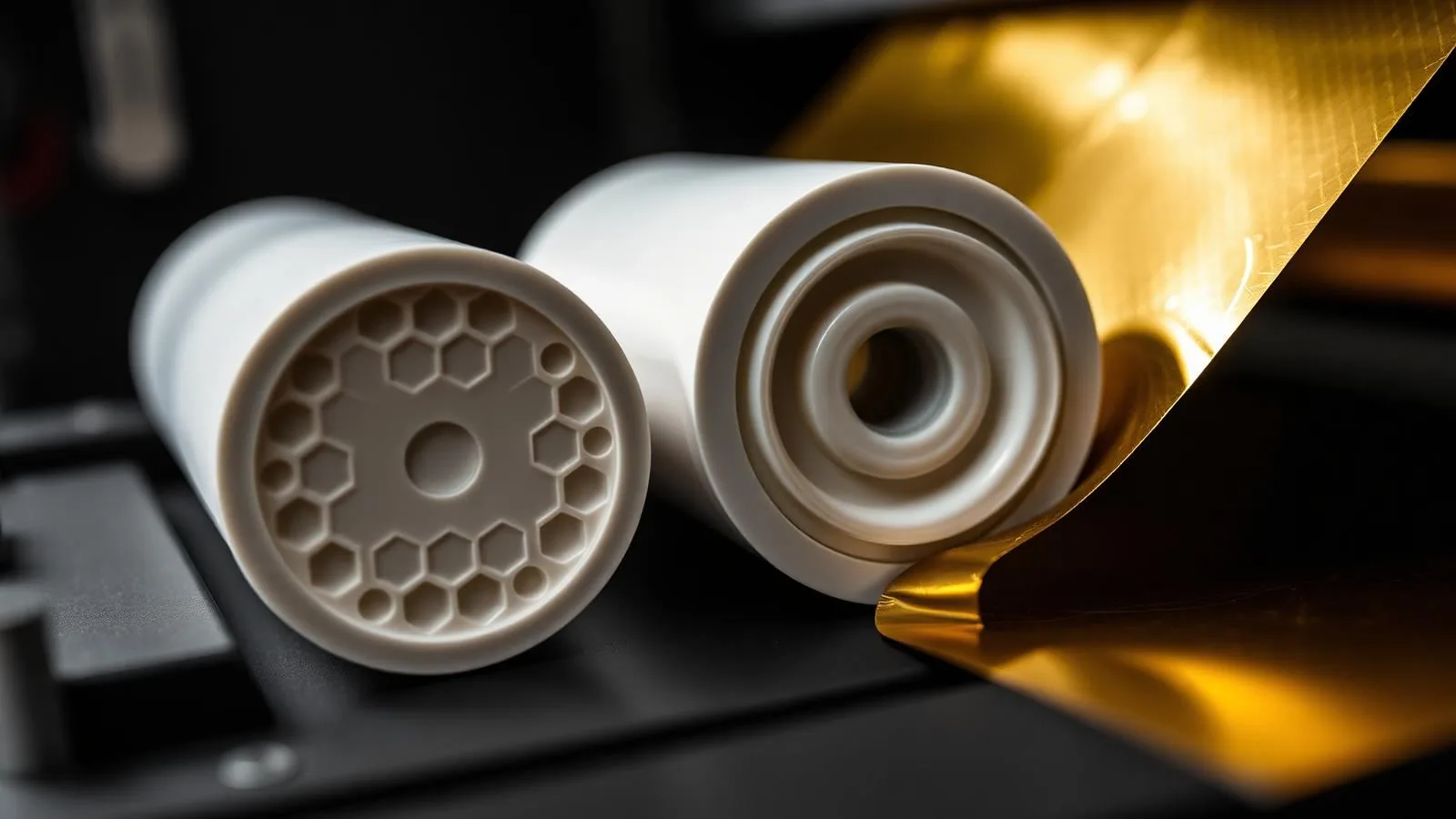
In a UV flexo cold-foil unit, the anilox roller meters the adhesive that is printed in the foil image. Its job is to deliver a consistent adhesive film, and what that film needs to be depends on the adhesive, the foil, the face material and the press. This guide explains what to ask your suppliers and what to record, without offering a universal specification.
CFS supplies cold transfer foil rolls. Anilox rollers, adhesives, UV curing equipment and presses come from your other suppliers, and CFS does not sell them or provide on-site installation.
What does an anilox do in a cold foil unit?
The anilox transfers adhesive to the printing plate, which prints the adhesive image onto the label. Foil attaches only where adhesive was printed, so adhesive application affects coverage and edge definition. Other variables also affect the same symptoms, so do not assume the anilox is the cause of a defect without checking.
Is the nominal volume the amount of adhesive applied?
No. A roller's nominal volume is a starting reference supplied by the manufacturer. The film actually printed also depends on the roller's condition and wear, cleanliness, cell geometry, the adhesive and its temperature, the plate, running speed and the press setup. Treat the nominal value as one input, not a guarantee, and do not turn a volume figure into an expected coating weight without measuring it under your conditions.
For the same reason, avoid treating any volume threshold as the single root cause of pinholes or edge blur. Those symptoms can come from several places; the pinholing and ghosting diagnosis guide and the defect guide help sort through them.
Where do the anilox values come from?
Start with the adhesive supplier's recommendation for your press and foil, then confirm it with the anilox supplier and in a trial. The UV cold foil adhesive guide covers what to ask adhesive and equipment suppliers. Do not copy a specification from an article, including this one, or from another press.
What should a trial record?
Use this table as a worksheet. It is a template for your own records, not a set of results.
| Variable | Where to get it | What to record in the trial | When to look further |
|---|---|---|---|
| Adhesive supplier recommendation | Adhesive data sheet and supplier | Grade, recommended application guidance and any conditions it states | If the observed result differs from what the supplier expects |
| Nominal volume and units | Anilox manufacturer | The stated volume and unit system | If different suppliers use different units |
| Line count and cell geometry | Anilox manufacturer | Line screen and cell shape | When fine detail and solids behave differently |
| Actual condition | Cleaning log and measurement by the supplier or a qualified method | Condition, last cleaning and any measured change from new | When behavior changes without a setup change |
| Adhesive temperature and viscosity | Your own measurement | Measurement method, temperature and the value read | When results drift during a run |
| Solids and fine detail | Trial artwork | Appearance of solids, text and fine lines on the same sample | When one improves while the other worsens |
| Running speed | Press record | Speed used for the trial | When results change between speeds |
| Curing arrangement | Equipment supplier documentation | Lamp type, placement and the supplier's stated requirement | When adhesion or transfer is inconsistent |
| Observation | Your sample inspection | Photographs, notes and who approved or rejected | Always, before changing anything else |
How should trial changes be made?
Follow the equipment makers' operating and safety instructions. Do not use settings taken from another job for safety-critical equipment. Change one variable at a time, keep conditions comparable and record the effect before the next change. Keep the retained sample so that a later result can be compared.
What are the common reasons to look beyond the anilox?
Adhesive and cure, plate condition, pressure, web tension, face material and foil all influence transfer. If a change to the anilox does not improve the result, check the other variables rather than repeating the same change. For setup records beyond adhesive application, see the press setup checklist, and for how foil selection fits together with label materials, see the flexo cold foil materials page.
Next step
If you have recorded your adhesive, anilox and press details and have a question about foil supply, you can contact CFS with that record.
Frequently asked questions
Does CFS sell anilox rollers? +
No. CFS supplies cold transfer foil rolls. Anilox rollers, adhesives and equipment come from other suppliers.
Is there a single correct anilox for cold foil? +
No universal specification applies. Follow the adhesive supplier's guidance for your press and foil, and confirm the result in a trial.
Does anilox volume alone cause pinholes? +
Not necessarily. Pinholes can have several causes, including adhesive, cure, surface and equipment variables. Check the whole system before changing one part.
Can I use the same anilox for cold foil and other UV flexo printing? +
That depends on the adhesive and the job. Ask the anilox and adhesive suppliers, and record the result of a trial instead of assuming.