01
1 — Narrow-web flexo adhesive
UV adhesive printed on label-stock pressure-sensitive substrates (white BOPP, metallised PET, textured wine papers).
Cold foil that survives ice buckets, condensation and the chiller.
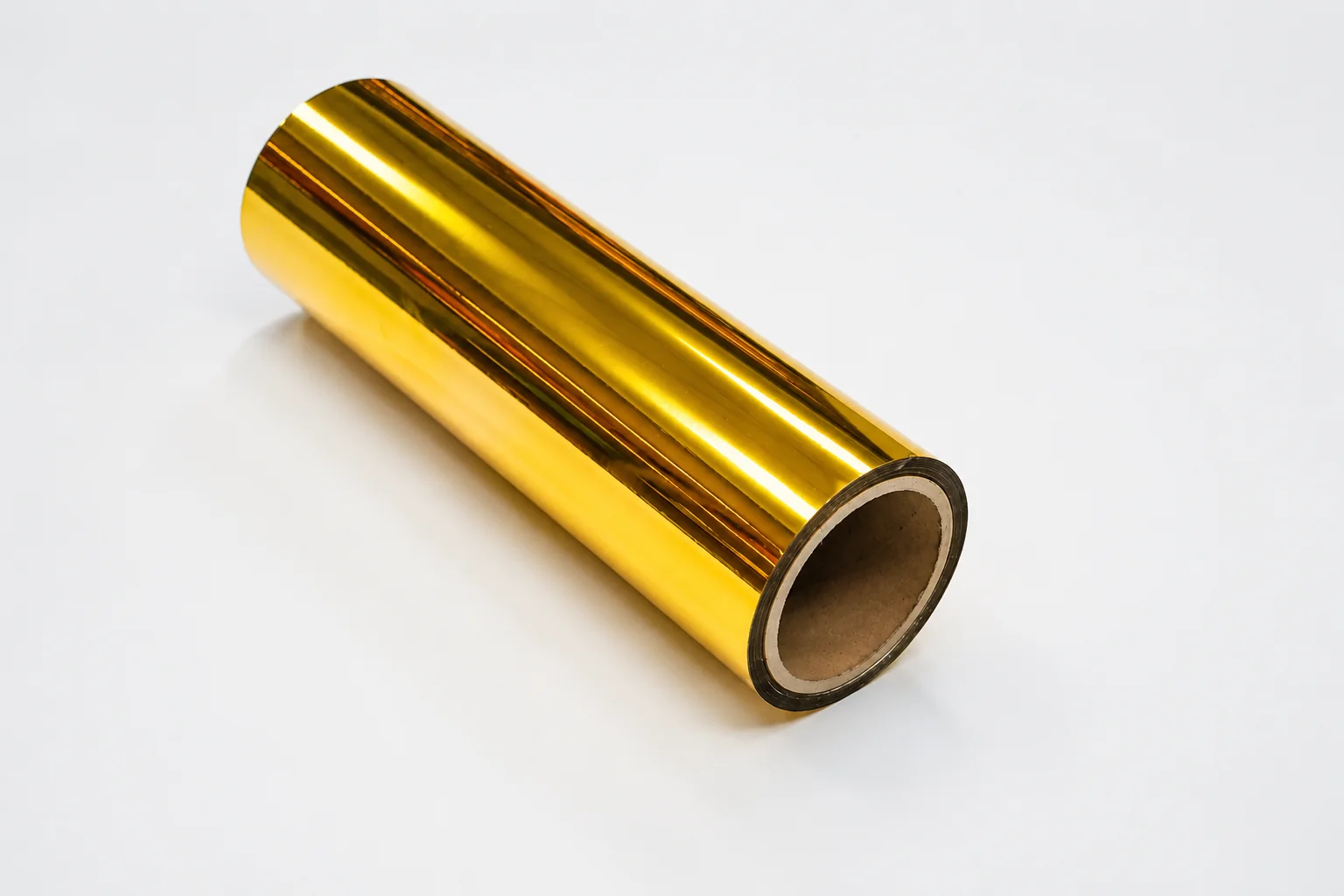
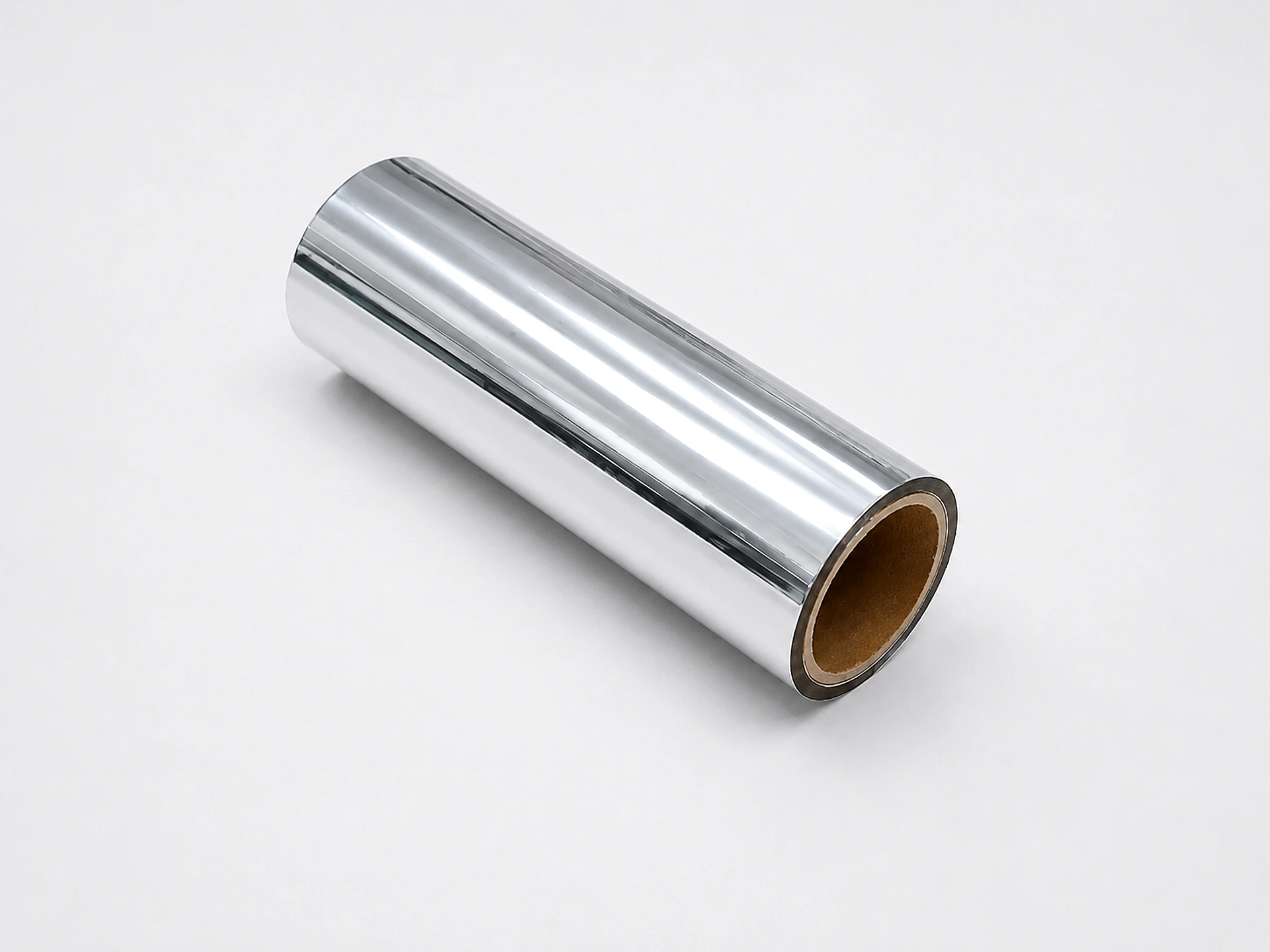
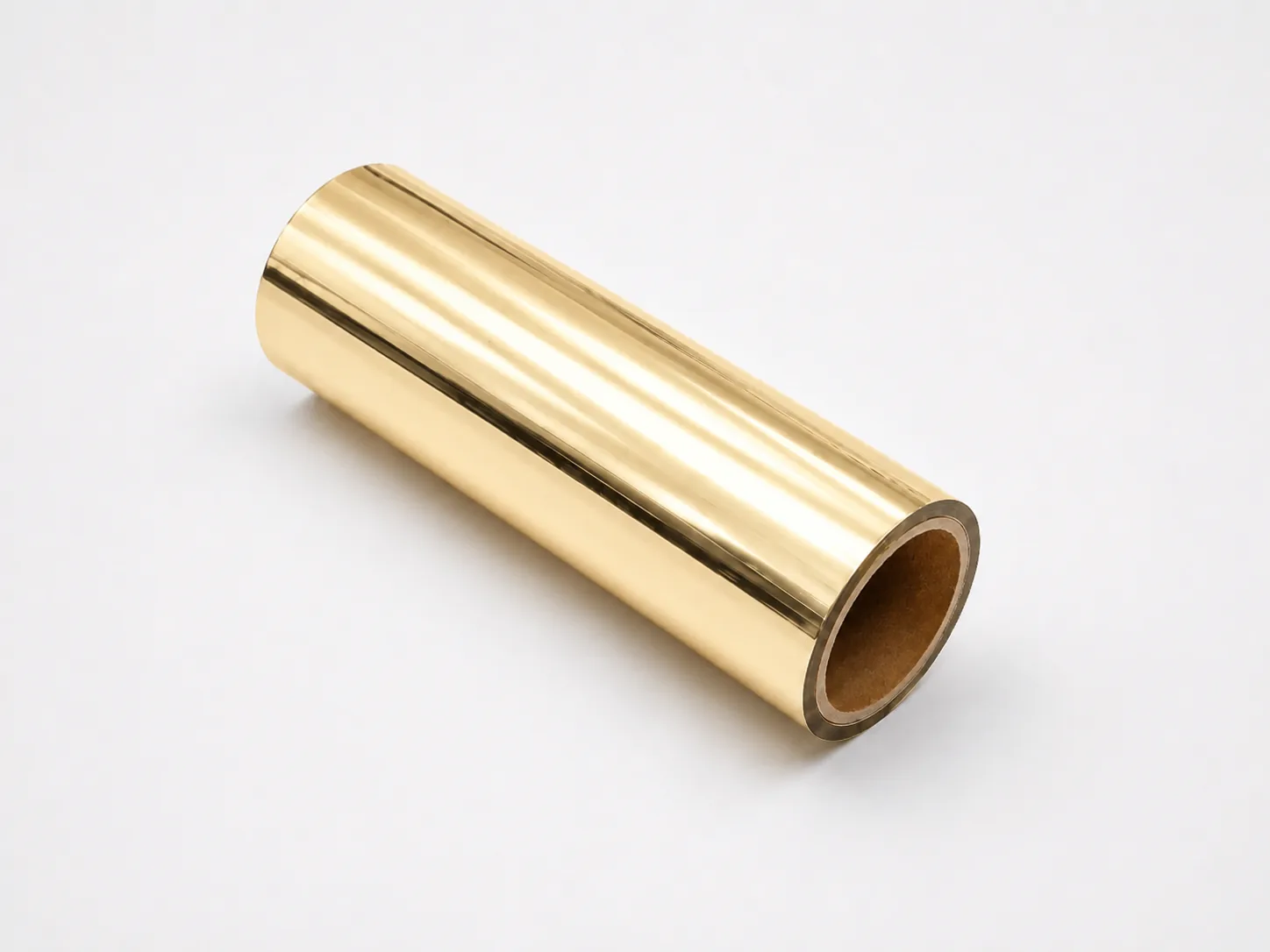
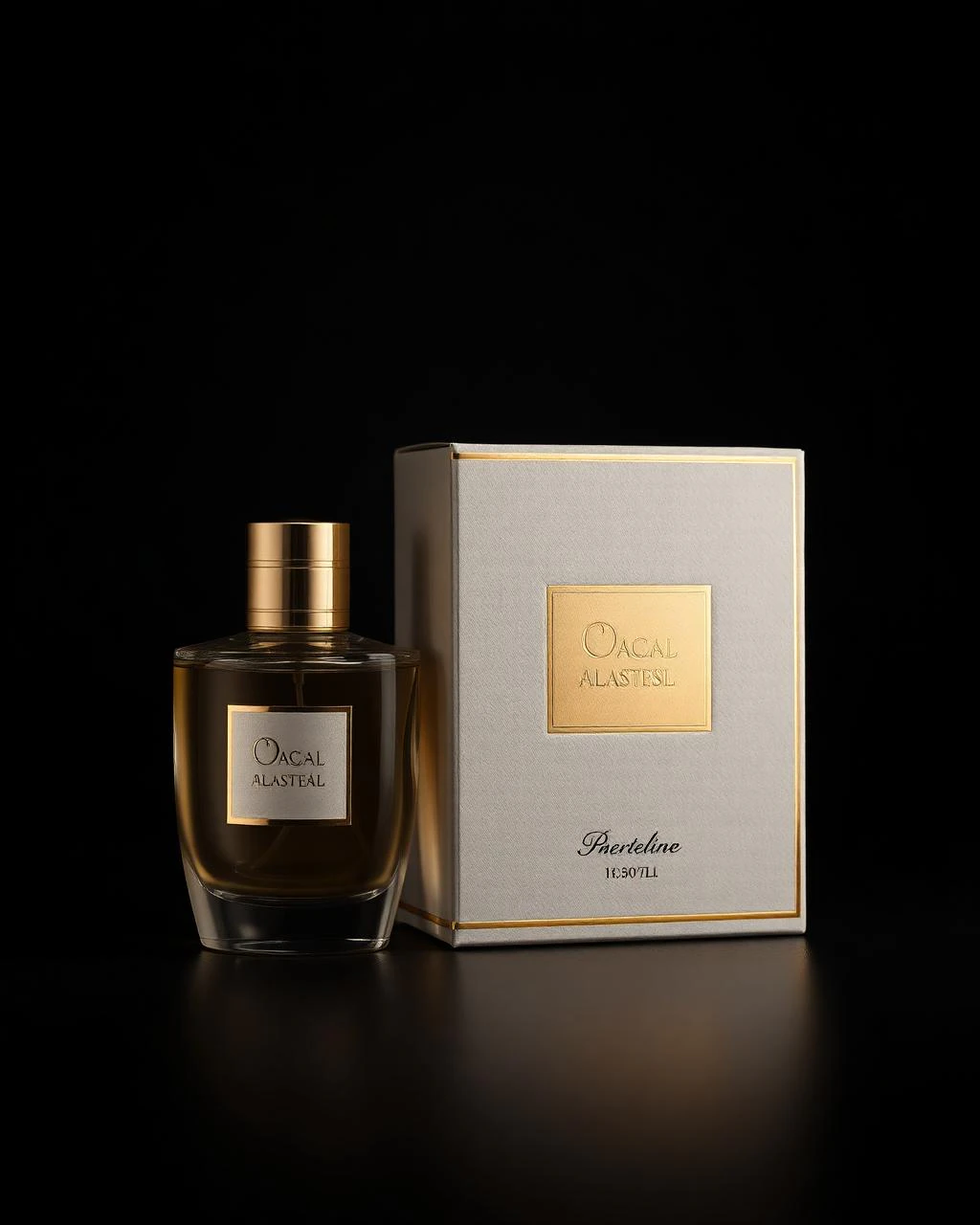
A wine or spirits label spends most of its life wet. Condensation, ice buckets, alkaline wash on returnable bottles, and the abrasive shock of bottling lines all conspire against decoration. CFS cold foil for beverage labels is formulated with a high-bond UV adhesive and an alkali-resistant lacquer that keeps mirror brilliance through the entire cold chain. Applied inline on narrow-web flexo presses (Gallus, Bobst M5, MPS EF Symjet), it removes the offline hot-stamp pass that traditionally bottlenecks premium label production.
Cold foil stamping applies mirror-grade metallic decoration to wine and spirits pressure-sensitive labels on narrow-web flexo (Gallus, Bobst M5, MPS EF) at 80–280 m/min on white BOPP, metallised PET and textured wine papers 75–110 gsm. UV cationic adhesive plus an alkali-resistant overlacquer survive ice-bucket condensation and 2 % NaOH / 80 °C bottle-wash cycles, replacing offline hot stamping foil passes on premium SKUs.
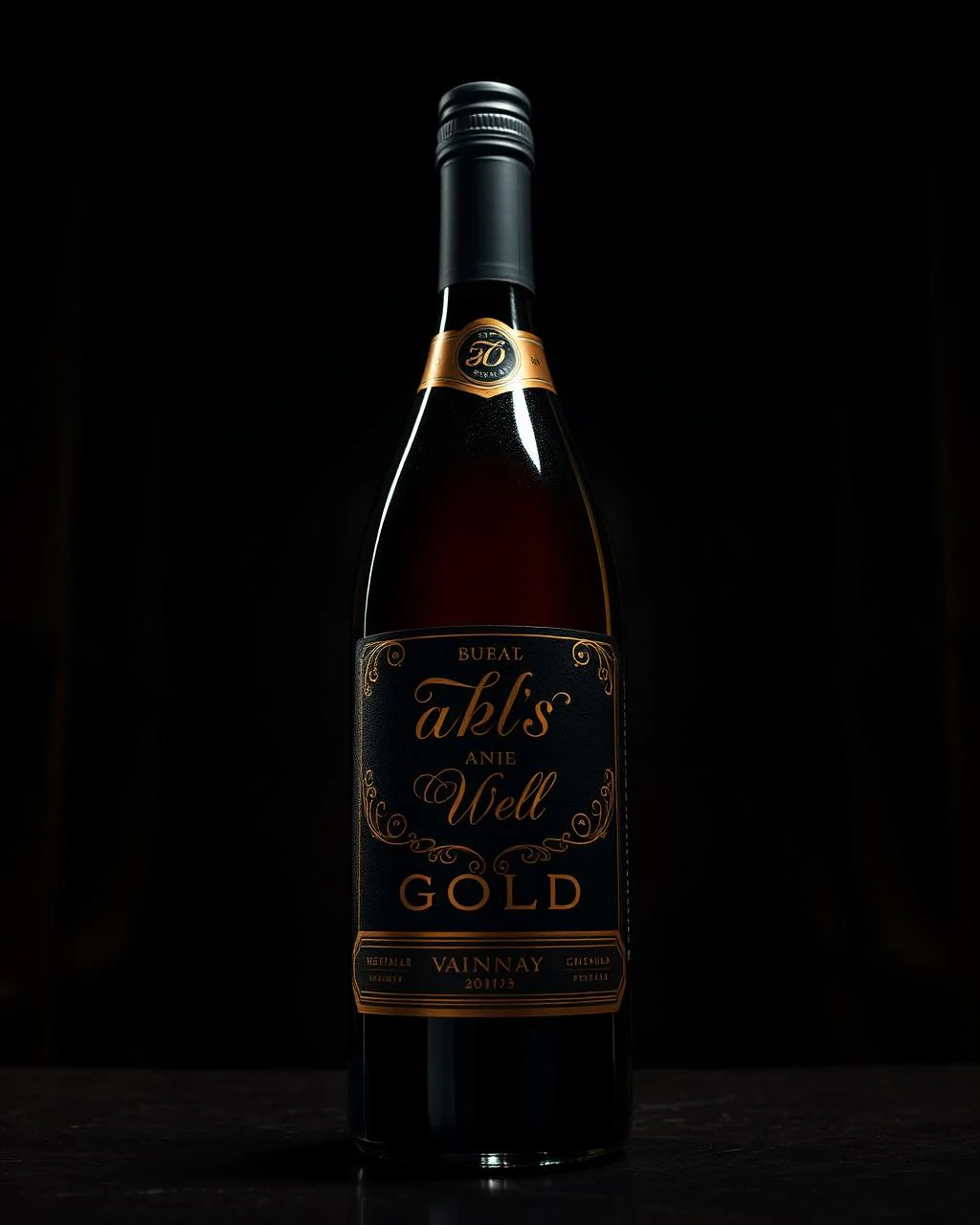
Cold foil stamping is fundamentally different from hot stamping — it lives inside the flexo print line, not beside it. Here is how it works for wine & spirits labels.
UV adhesive printed on label-stock pressure-sensitive substrates (white BOPP, metallised PET, textured wine papers).
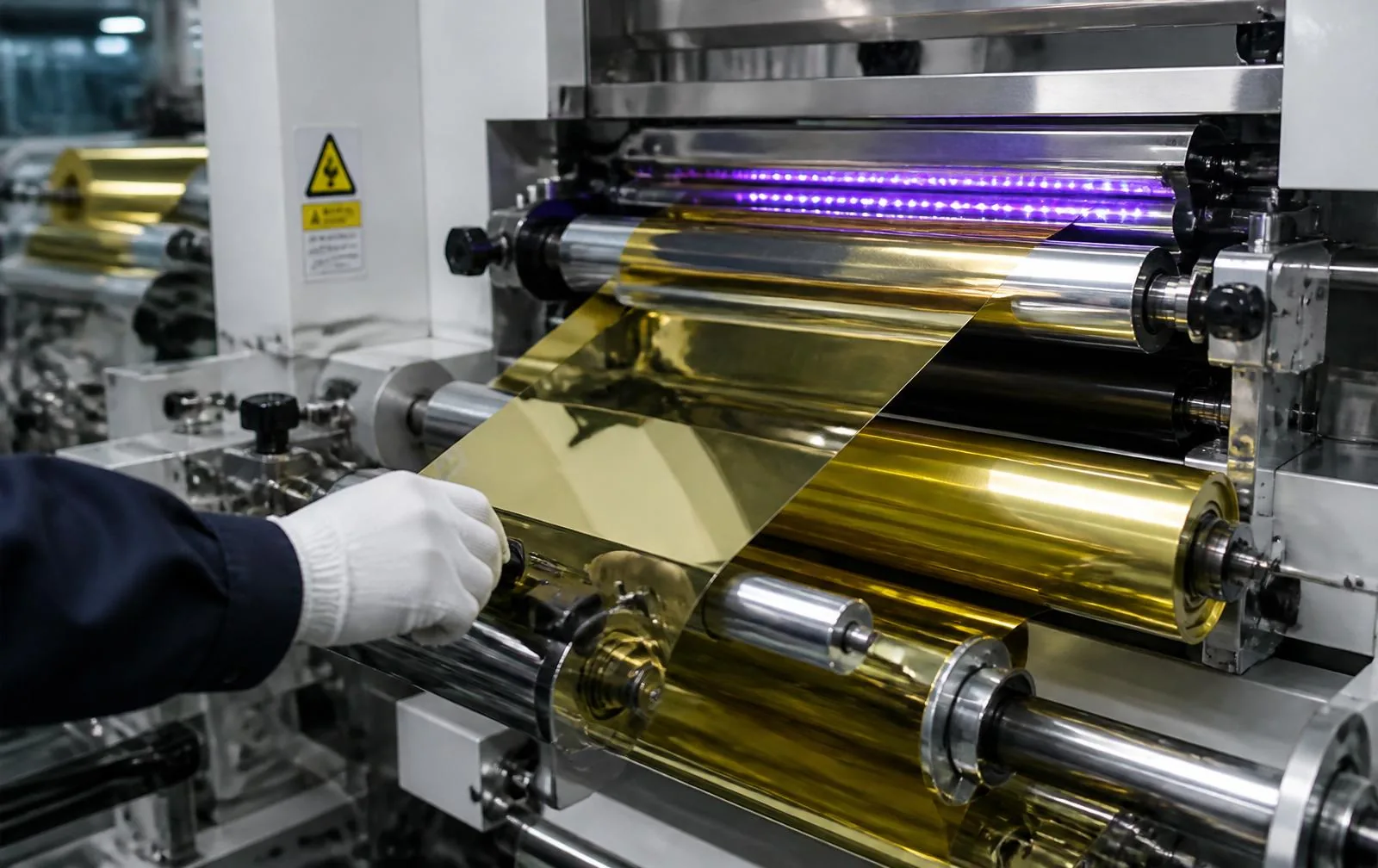
CFS foil applied at full press speed — no slowdown, no offline stamping pass.
Alkali-resistant overlacquer and selective matte UV protect against condensation and bottle-wash chemistry.
Side-by-side operating parameters for cold foil stamping and hot stamping foil on wine & spirits labels, using the substrate and press-speed window this vertical actually runs.
| Attribute | Cold foil stamping (CFS) | Hot stamping foil |
|---|---|---|
| Process | UV adhesive printed → cold foil laminated → instant UV cure (ambient temperature) | Heated brass/magnesium die at 100–150 °C presses foil onto substrate, offline |
| Typical substrate window | White BOPP, metallised PET, textured wine papers 75–110 gsm | Coated SBS/FBB; heat-sensitive films require special dies |
| Press speed | 80–280 m/min | 20–60 m/min (Kurz / Crocus benchmarks) |
| Tooling | Photopolymer flexo plate — hours, low cost | Etched brass/magnesium die — days, per-artwork cost |
| Inline overprint | Yes — CMYK/varnish overprint in same press pass | No — decoration happens after print, offline |
| VOC / m² | ≈ 0 g/m² (100% UV-cure adhesive) | 2–6 g/m² for solvent-adjacent finishing steps |
| Registration | ±0.05–0.10 mm (servo combination presses) | ±0.15–0.30 mm typical |
Successful wine & spirits labels jobs share four upstream decisions: substrate and finish, foil family, adhesive coat weight and overprint sequence. Lock these in design review and the press run becomes a repeatable production task instead of a make-ready experiment. Our technical team publishes per-product run-sheets for each foil SKU so prepress, platemaking and the pressroom work from the same numbers.
On press, the variables that matter most are anilox cell volume (we recommend 8–12 cm³/m² for most wine & spirits labels work), UV lamp dose (350–500 mJ/cm² for cationic adhesives), nip pressure on the foil station, and web tension stability across the foil-transfer zone. Combination flexo presses from Bobst, Gallus, Nilpeter, MPS and Mark Andy all run our foil range out of the box; older machines may need a foil-station retrofit, which we can scope with your OEM.
For brand owners, the practical takeaway: send your dieline, intended substrate and a sample of a competitor finish you want to match or beat. We will return a printed sample pack on your stock, a recommended foil family, and a target run-sheet within 5 working days.
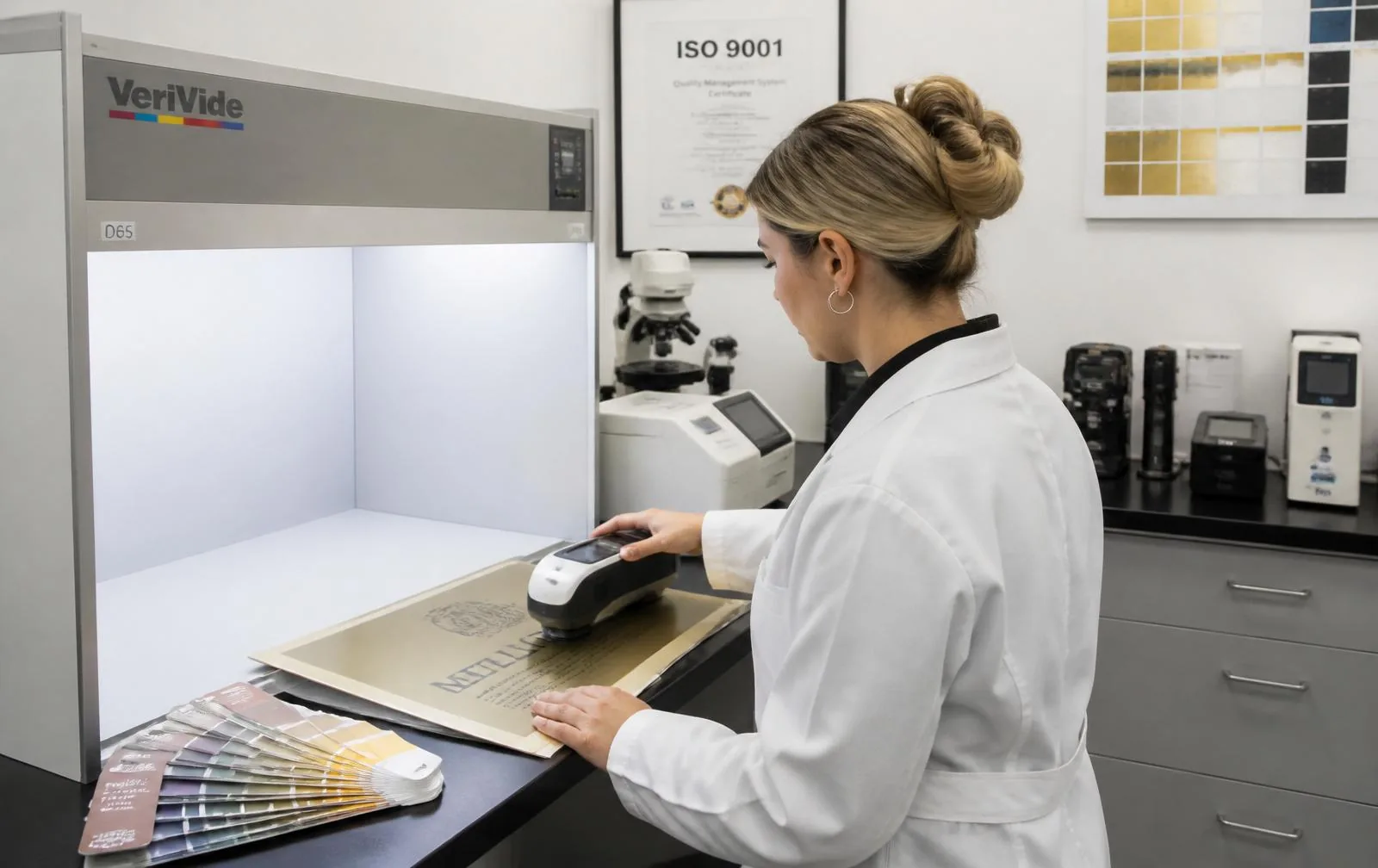
Every production batch is checked on a Konica Minolta CM-26d spectrophotometer for L*a*b* consistency, plus inline 100% optical inspection for pinholes and edge definition. Tolerance bands and golden samples ship with each lot.
Foil supplied to wine & spirits labels customers is produced in plants running on 100% renewable electricity, with carrier-film take-back through our French recycling partner. Full ISO 14040/14044 LCA data is available on request. Read our sustainability brief.
Products tested against EuPIA, Swiss Ordinance Annex 10 and Nestlé Guidance Note for low migration; FSC chain-of-custody available on paper-backed lines; REACH and RoHS declarations on every technical data sheet.
Don't see your question? The technical team replies within one working day on the contact form.
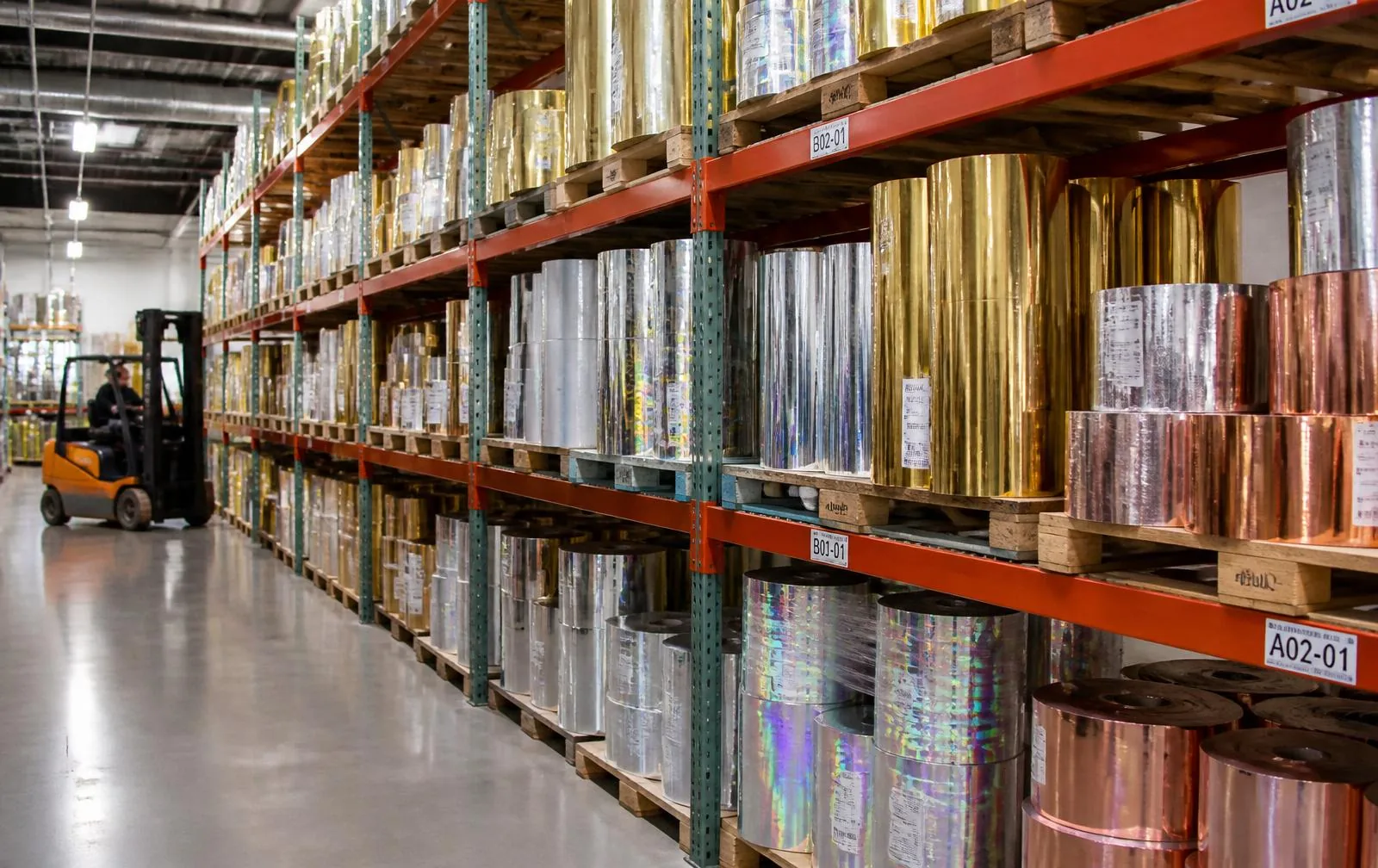
Cold foil coating, slitting, colour matching and QC all happen under one roof in Wenzhou, Zhejiang, China. Every roll ships with a lot code so overseas buyers can trace it back to the production batch.
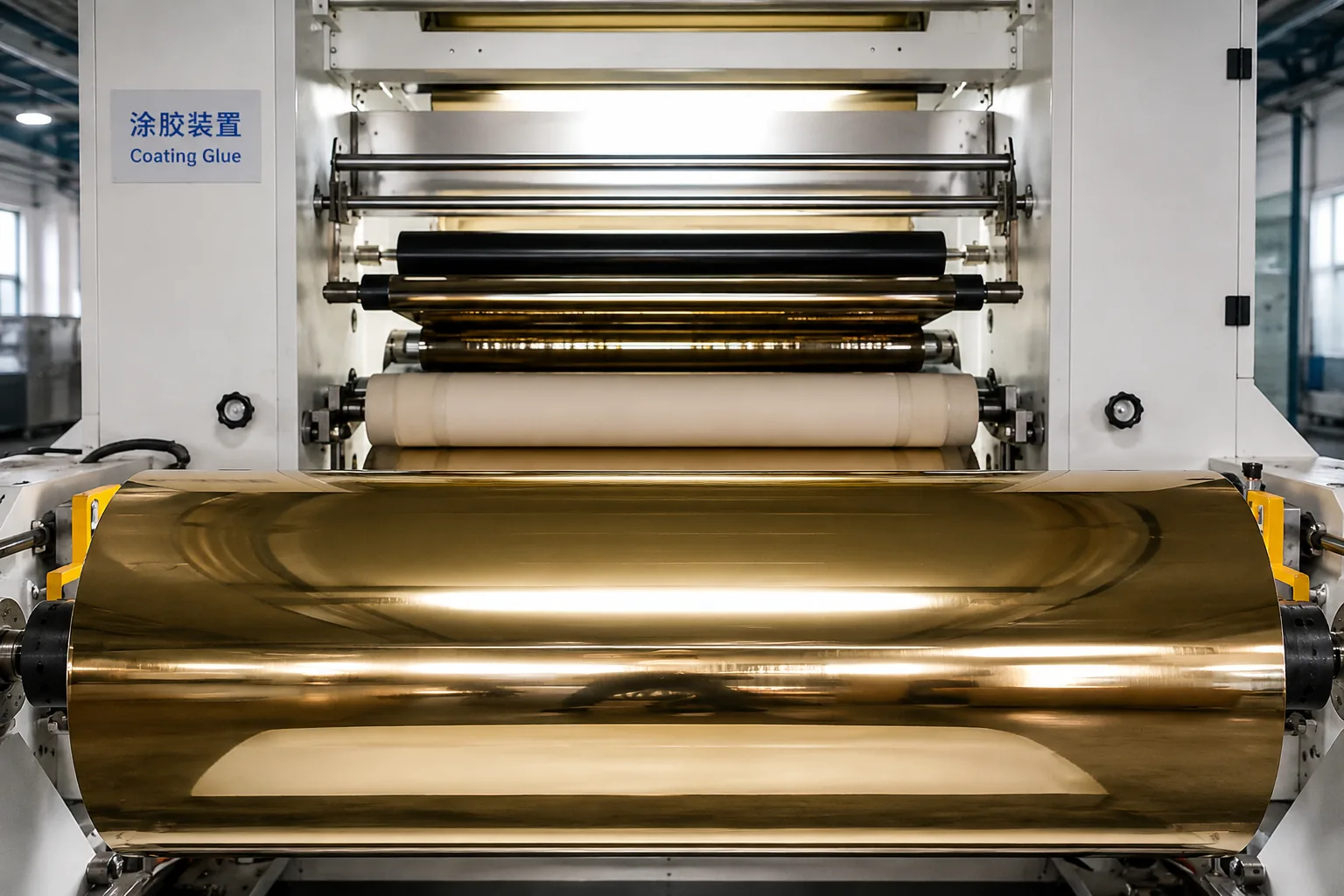
Sample cards, press validation, and substrate compatibility — our technical team is one form away.