Custom Cold Foil Colors for Labels and Packaging
Specify custom cold foil by a current Pantone reference or an approved physical swatch, then qualify the result on your own substrate, ink, varnish and press. CFS supplies custom cold foil rolls for UV flexo and offset packaging applications, with a physical sample and press trial used to approve the color before production.
For label converters, folding-carton printers and packaging teams that need a repeatable metallic brand color rather than the nearest catalog shade.
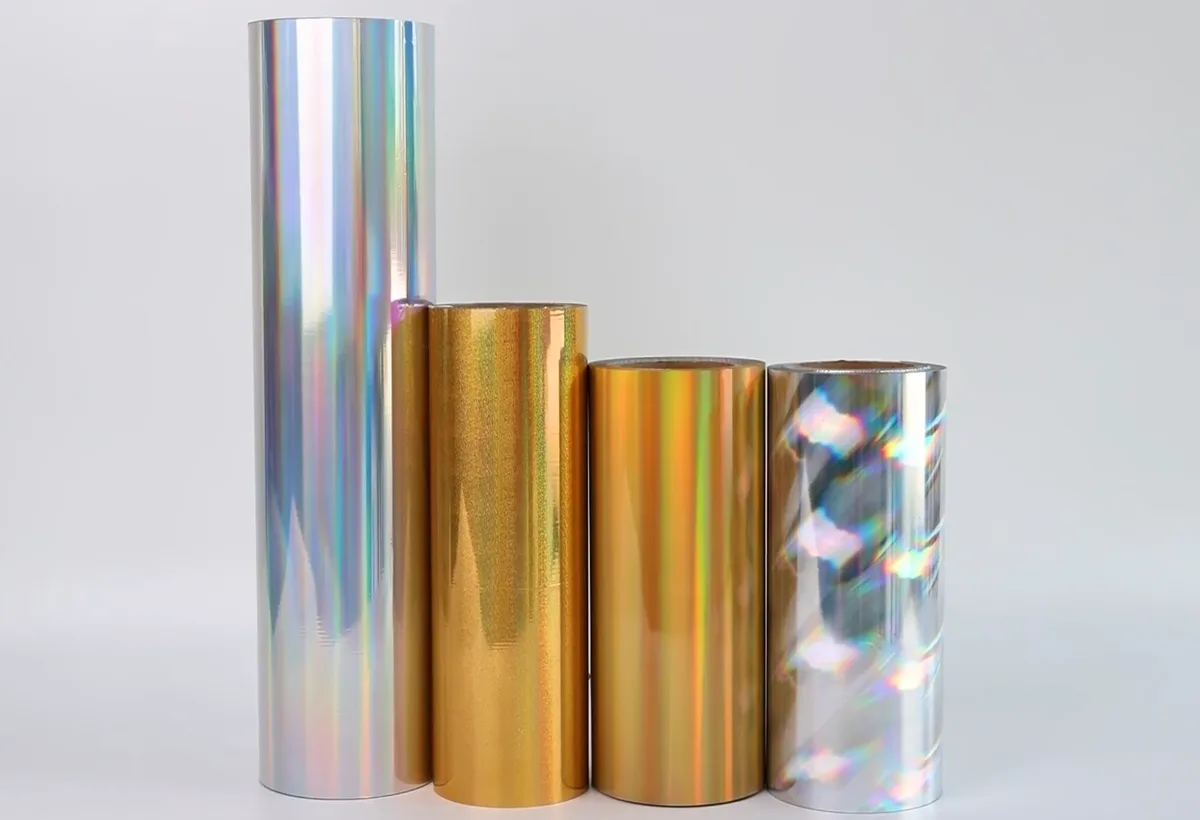
Reference
Pantone Metallics Coated code or approved physical sample
Routes
Stock shade, silver-plus-overprint or custom pre-colored foil
Qualification
Substrate-specific sample and press trial
Presses
UV flexo and UV/offset configurations, subject to grade approval
Production
Slit width, roll length, core and wind direction confirmed in the RFQ
A metallic reference is a target, not a screen color. The final appearance changes with the reflective base, substrate, transparent ink, topcoat, lighting and viewing angle. Approve the physical press sample under agreed conditions before releasing production.
What is custom cold foil?
Custom cold foil is a foil roll or on-press metallic color build developed for a specific brand shade, finish and production condition. The right route may be a custom pre-colored foil, or it may be an overprintable silver foil tinted with transparent ink. The better choice depends on annual volume, number of shades, press configuration and how tightly the finished package must match an approved physical standard.
CFS supplies the foil material to printers and converters; it does not replace the converter's prepress, ink formulation or press approval. For finished-label planning, use the custom foil labels guide. For broad supplier selection, see the cold foil stamping supplier page. For the foil roll itself, continue with the selection process below.
Choose the right custom-color route
There is no single production method for every custom metallic color. Compare the three routes before requesting a sample.
| Route | Best when | Main advantage | Main limitation | What to approve |
|---|---|---|---|---|
| Nearest stock foil shade | A catalog gold, silver, copper, champagne or rose-gold shade is already close enough | Fastest qualification and lowest commitment | May not reproduce a proprietary brand color | Physical foil swatch and press sample |
| Silver cold foil plus transparent overprint | Several metallic colors are needed in one design or colors may change by SKU | Broad color range from one overprintable silver base | Color depends on ink film, foil receptivity, varnish and press control | Ink recipe, foil grade, substrate and finished press sheet |
| Custom pre-colored cold foil | A repeat metallic shade is used at meaningful volume and must be supplied as a dedicated foil | Simplifies the press color build and supports repeat purchasing against an approved master | Requires color development, a custom MOQ and a longer lead time | Approved master sample, tolerance, lot record and production roll |
Custom holographic origination is a separate project because it involves pattern development and registration, not only color. Use the anti-counterfeit cold foil application page for security-pattern requirements.
Can cold foil match a Pantone color?
Cold foil can be developed toward a Pantone Metallics Coated reference or another approved physical standard, but the Pantone code alone is not a universal guarantee of the final package appearance. Pantone metallic references are printed standards, while cold foil is a reflective multilayer material that may also be overprinted and coated.
For a useful brief, identify the complete reference, including its suffix, and send a recent physical chip or brand-approved sample where possible. A coated-paper reference should not be assumed to look identical on clear BOPP, PET, textured paper or folding carton. The approval sample must reproduce the actual production stack: substrate, cold foil, transparent ink if used, and final varnish or laminate.
Pantone recommends D50 lighting for printed color evaluation. Because metallic surfaces change with viewing angle, review the sample visually from more than one angle and document the instrument, geometry, illuminant and color-difference formula used for any numerical tolerance. A single Delta E number without those conditions is not a complete metallic-color specification.
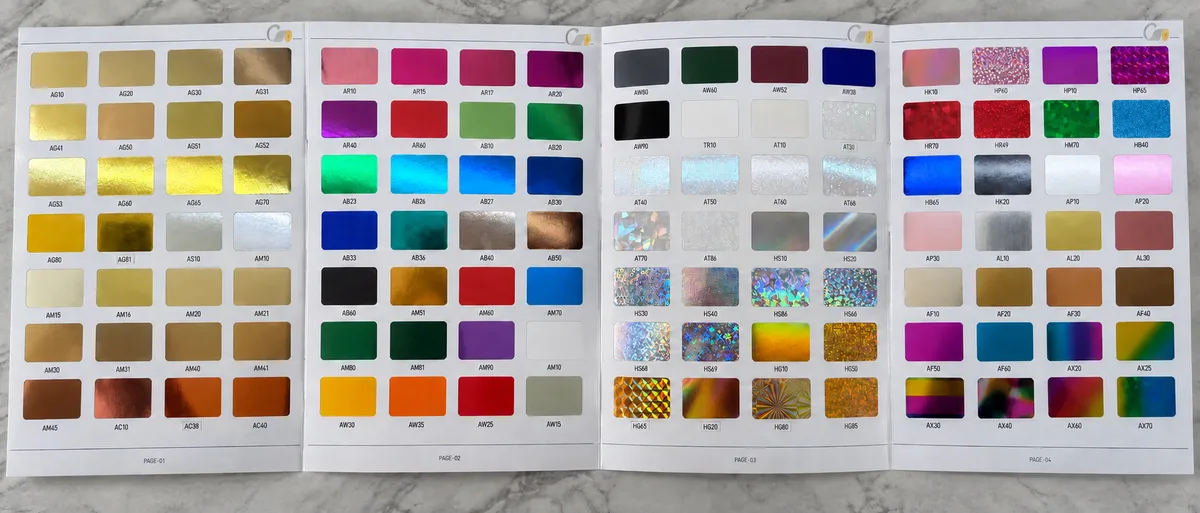
What CFS needs to develop your color
Send these items together so the technical team can recommend a stock, overprint or custom pre-colored route without repeated clarification.
- 1.Target reference: the full Pantone Metallics Coated code, a current physical chip, or a signed brand master sample.
- 2.Acceptable appearance: warm or neutral tone, mirror or satin finish, brightness, and any viewing-angle concerns.
- 3.Substrate: coated paper, SBS/FBB board, white or clear BOPP, PET or another film, including thickness or basis weight.
- 4.Printing process: UV flexo, sheetfed offset or web offset, plus the press and cold-foil module.
- 5.Adhesive and cure system: brand/grade where known, UV or LED configuration, and the planned line speed.
- 6.Overprint and topcoat: CMYK or spot ink system, transparent ink recipe if already developed, and gloss, matte or soft-touch protection.
- 7.Artwork conditions: foil coverage, finest line or type, halftones, reverses and whether multiple metallic colors share one foil base.
- 8.Roll specification: slit width, roll length, core ID, outside diameter and wind direction.
- 9.Commercial requirement: trial quantity, annual volume, destination, required delivery date and compliance documents.
- 10.Approval method: who signs the sample, the viewing condition, the reference sample and the agreed acceptance tolerance.
Download or copy the cold stamping foil quote checklist, then attach the color reference and artwork to the form below.
Custom cold foil approval workflow
1. Technical review
CFS first checks whether a stock foil, a silver-overprint build or a custom pre-colored roll is the most practical route. The recommendation must consider the actual substrate, press, adhesive, overprint and annual volume, not only the color name.
2. Reference and specification lock
Buyer and supplier record the physical color reference, target finish, roll construction and evaluation conditions. If the reference is a Pantone code, the specific Pantone library and suffix must be written into the brief.
3. Physical sample
The technical team prepares the appropriate physical sample route. A custom foil swatch alone can screen the shade, but it cannot replace a trial on the intended substrate when ink, adhesive and varnish affect the finished appearance.
4. Press trial
Run the proposed foil on the production press or a representative line. Record adhesive, anilox or coating condition, cure setting, speed, nip, substrate lot, overprint ink and protective coating. Evaluate transfer, pinholes, adhesion and finished color together.
5. Written approval and production
Approve a retained physical master and record the agreed acceptance method before the production order is released. The production specification should connect the color master to the foil grade, roll dimensions and lot documentation so a reorder is compared with the same standard.
How custom metallic color should be controlled
Color control starts with a stable reference and a repeatable viewing condition. For printed graphics, D50 is the standard visual-evaluation starting point. The substrate, backing, measurement mode and instrument geometry must remain consistent between approval and incoming inspection.
Metallic and pearlescent effects are angle-dependent. Multi-angle instruments are designed to characterize effect finishes more completely than a single fixed geometry, but the final acceptance plan should reflect the buyer's available equipment. If only conventional print measurement is available, document that limitation and retain visual approval of the finished press sample instead of presenting one measurement as a complete description of appearance.
For repeat orders, compare the new lot with the approved physical master under the same light, on the same substrate construction and after the same overprint or coating step. A foil roll that looks close before printing may shift after a transparent ink or matte varnish is applied.
Custom cold foil specifications and commercial terms
| Item | What the buyer should specify | CFS response |
|---|---|---|
| Color reference | Full Pantone reference or approved physical sample | Recommended stock, overprint or custom-color route |
| Finish | Mirror, satin, matte, holographic or other approved effect | Available base and surface recommendation |
| Foil grade | Flexo or offset process, adhesive and substrate | Grade selected after technical review |
| Slit width | Required web/format width in mm | Manufacturing feasibility and tolerance |
| Roll format | Length, core ID, outside diameter and wind direction | Production roll specification |
| Trial | Sample width/length and press-trial date | Sample plan and dispatch date |
| MOQ | Annual volume and quantity per slit width | Quote only after route and color are confirmed |
| Lead time | Required approval and production dates | Separate sample-development and production dates |
| Quality record | Reference master and agreed test method | Lot-specific data available in the quotation/CoA scope |
| Shipping | Destination and Incoterm | Freight option and total timeline |
Custom-color MOQ and lead time begin after the color route and approval standard are agreed. Ask CFS to confirm the current commercial minimum, development schedule and production schedule in writing for your project.
Applications for custom cold foil
Wine and spirits
Develop a controlled warm gold, champagne, copper or proprietary metallic accent for bottle labels and folding cartons. Approve the sample after the intended varnish and any ice-bucket or handling test required by the converter.
Cosmetics and personal care
Use rose-gold, neutral silver or tinted metallic finishes across cartons, pressure-sensitive labels and tube decorations. Confirm the final color after soft-touch or matte coatings because those layers can change brilliance and apparent tone.
Food, beverage and household packaging
Coordinate a brand metallic across paper and film constructions while keeping each production stack separately approved. Compliance requirements must be reviewed for the actual package structure and market; do not infer food-contact suitability from color alone.
Pharmaceutical and security packaging
Combine a controlled metallic color with an approved holographic or tamper-evident design where required. Treat security-pattern origination, regulatory documentation and color approval as separate specification items.
What you receive with a custom-color quotation
A useful quotation should state more than a price per linear meter. It should identify:
- the recommended color route and foil grade;
- the reference used for approval;
- the proposed sample and press-trial plan;
- slit width, roll length, core and wind direction;
- MOQ and price basis for the approved construction;
- sample-development and production lead times shown separately;
- the quality records and compliance documents included;
- Incoterm, destination and estimated shipping schedule;
- the procedure for approving and retaining the physical master.
Use the cold foil product comparison to review stock bases, or read how CFS handles broader mill-direct cold foil manufacturing in Wenzhou, Zhejiang, China before submitting the custom brief.
Request a custom cold foil sample
Send the target reference, substrate and press conditions. CFS will first recommend whether the project should use a stock shade, silver cold foil plus overprint, or a custom pre-colored foil. The response should include the missing technical inputs, sample route and a realistic quotation timeline.
Need a standard shade? Browse all cold foil products.
Frequently asked questions
Technical references
These sources support general industry principles; they do not certify, approve or endorse CFS.
- ITW ShineMark — Cold Foils
- ITW ShineMark — Cold Foils FAQs
- Koenig & Bauer — Inline cold foil application retrofits
- Pantone — Learn more about the Metallics Guide
- Pantone — Lighting Indicator D50
- ISO 13655:2017 — Spectral measurement and colorimetric computation for graphic arts
- X-Rite — Metallic color measurement