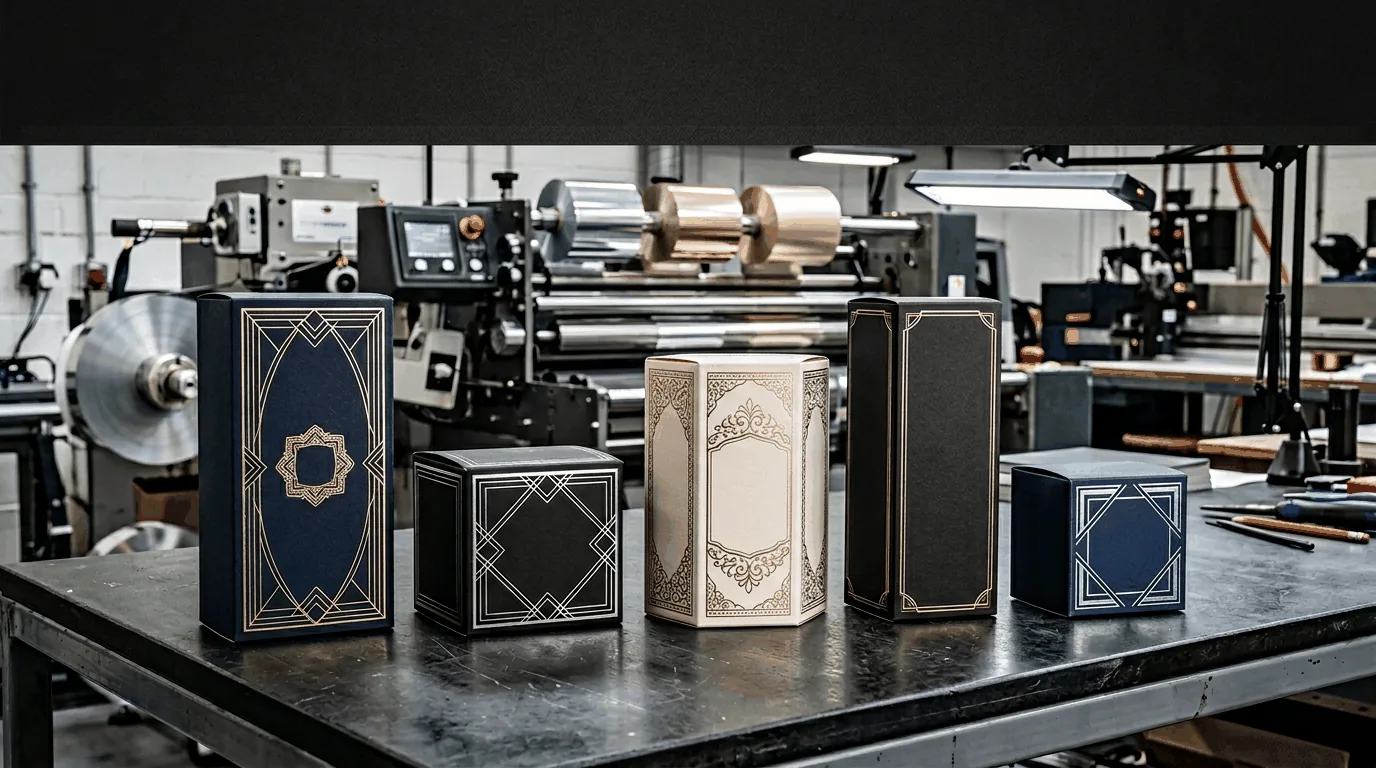
“TL;DR: Luxury cosmetic cold foil cartons work best when metallic effects are treated as part of the print architecture, not as a last-minute decoration. Cold foil is especially strong for skincare, fragrance and makeup cartons that need fine metallic detail, overprinted rose-gold or champagne-gold tones, multi-SKU speed and premium shelf impact. The critical decisions are carton board surface, adhesive laydown, foil coverage, overprint color, varnish protection and acceptance testing.
Search intent around “luxury cosmetic cold foil cartons” is highly commercial. Buyers are usually comparing decoration routes, asking whether cold foil looks premium enough for beauty packaging, and checking how to control cost across multiple shades, SKUs and seasonal launches. In cosmetic folding cartons, the best answer is rarely “add more foil.” It is to place cold foil where reflectivity builds brand codes: logos, borders, botanical linework, ingredient highlights, limited-edition panels and color-shift accents.
Market context supports that focus. Technavio’s cosmetic packaging market coverage reports an expected USD 27.7 billion growth opportunity for 2025–2029, while luxury packaging research consistently lists cosmetics and fragrances among the key end-use sectors. For the process itself, Wikipedia’s cold foil printing overview describes cold foil as a print-applied metallic foil process, which is exactly why it fits carton programs with multiple designs and overprinted metallic color families.
For the broader decision between decoration methods, see Hot vs Cold Foil Stamping: 2026 Buyer’s Guide. If your team is mainly comparing budget and setup routes, start with Cost Difference Between Cold Foil and Hot Foil Stamping.
Why cold foil suits luxury cosmetic cartons
Cosmetic cartons must do more than hold a jar, bottle or tube. They signal price point, ingredient story, shelf hierarchy and giftability before the customer opens the box. Cold foil helps because it can be integrated inline with print, then overprinted to create a broad metallic color system from a silver base.
That matters for beauty brands with many SKUs. A skincare line may need champagne gold for night cream, silver for serum, rose gold for eye treatment and soft copper for seasonal kits. Cold foil can support those families through controlled overprinting instead of requiring a separate foil color for every finish.
The main advantages are:
- fine metallic detail for crests, frames, botanical illustrations and micro-patterns;
- overprintable color control for gold, rose gold, copper, bronze or tinted metallics;
- inline efficiency for folding carton programs with multiple SKUs;
- strong shelf contrast against matte varnish, soft-touch coatings or pearlescent board;
- design flexibility when metallic areas must align tightly with printed graphics.
For process fundamentals, read How Cold Foil Stamping Works: Step-by-Step and What Is the Cold Foil Technique?.
Where cold foil performs best on cosmetic packaging
Cold foil should be used deliberately. On luxury cosmetic cartons, the most effective placements are often small-to-medium areas with high visual importance rather than full-carton metallic coverage.
| Carton design element | Cold foil use | Buyer benefit |
|---|---|---|
| Brand mark or monogram | Fine silver foil overprinted to signature gold or rose gold | Premium recognition without excessive coverage. |
| Botanical or scientific line art | Thin metallic lines around ingredients or actives | Supports a clinical-luxury or natural-luxury positioning. |
| Borders and frames | Metallic perimeter lines, corner details, bands | Adds structure and shelf visibility. |
| Shade or SKU system | Same foil base overprinted into multiple metallic colors | Simplifies multi-SKU color families. |
| Limited editions | Higher foil coverage, holographic accents, seasonal metallic tones | Creates collectability and campaign impact. |
| Ingredient callouts | Small reflective badges or capsules | Draws attention without making the carton look noisy. |
Cold foil can also pair well with embossing, debossing, spot UV and tactile varnish, but each extra finish increases the number of variables that must be tested. The best luxury cosmetic carton usually combines contrast, restraint and repeatability.
Substrate and surface choices
The carton board decides how clean the foil will look. Smooth coated folding carton board is usually easier to qualify than rough natural board because the UV adhesive can sit on the surface more evenly. Pearlescent, metallized or specialty boards can work, but they require careful testing because reflectivity, ink holdout and varnish behavior may change the final color.
Important substrate checks include:
- 1Surface smoothness: smoother board supports cleaner foil edges and stronger reflectivity.
- 2Ink and adhesive holdout: porous surfaces can reduce foil density.
- 3Fold performance: foil near scores must survive carton forming.
- 4Varnish compatibility: matte, gloss and soft-touch coatings can change perceived metallic color.
- 5Color management: overprinted metallics need proofing under real retail lighting.
If you are considering uncoated or natural cosmetic cartons, compare this topic with Which Is Better for Uncoated Paper: Cold Foil or Hot Foil? before approving artwork.
Cold foil versus hot foil for luxury cosmetics
Hot foil can create deep tactile impact, especially for short-run prestige packaging and textured stocks. Cold foil is usually stronger for carton programs that need fine registration, overprinted metallic color systems and inline production efficiency.
| Decision factor | Cold foil carton advantage | When to consider another route |
|---|---|---|
| Multi-SKU beauty line | One silver base can be overprinted into many metallic colors. | Use dedicated foils if brand color must match a very specific metallic standard. |
| Fine detail | Printed adhesive can hold delicate lines and patterns. | Very deep tactile relief may need hot foil or embossing. |
| Production speed | Inline workflow can reduce handling and make-ready steps. | Offline hot stamping may fit ultra-premium short runs. |
| Sustainability messaging | Efficient production and targeted foil areas can reduce avoidable waste. | Claims must be validated against the whole package, not only the finish. |
| Dense metallic panels | Works when surface and adhesive are qualified. | Hot foil or metallized board may be safer for very large solids. |
The U.S. Environmental Protection Agency’s sustainable materials management hierarchy is useful when discussing premium finishes. It pushes teams to look at the full material system, waste and lifecycle rather than making isolated claims about one decorative layer.
Specification checklist for buyers
Before requesting samples for luxury cosmetic cold foil cartons, send suppliers a complete specification package. This avoids vague recommendations and helps compare vendors fairly.
Include:
- carton board grade, caliper, coating and supplier;
- artwork files with separate cold foil adhesive layer;
- foil coverage percentage and minimum line weights;
- target metallic colors and whether they are overprinted from silver;
- varnish or coating stack: gloss, matte, soft-touch, aqueous, UV or laminate;
- forming requirements: scoring, folding, gluing, shipping abrasion and retail handling;
- acceptance tests: rub, scuff, tape pull, crease, barcode scanability and color tolerance.
For foil material selection language, use What Is Cold Stamping Foil?. For search-intent planning around buyer questions, see Cold Stamping Foil Search Trend: What Buyers Should Know This Week.
Common mistakes on cosmetic cold foil cartons
The most common mistake is using cold foil as a substitute for every metallic surface. In luxury cosmetics, restraint often looks more expensive. A small, precise metallic frame around a logo can outperform a full reflective panel if the carton also has tactile varnish, clean typography and controlled color.
Avoid these problems:
- placing dense foil across folds without crease testing;
- approving a metallic color from a screen mockup instead of a press proof;
- using fine reverse type inside heavy foil areas;
- forgetting that matte varnish can reduce perceived brightness;
- testing a smooth proofing board while production uses a different carton stock;
- treating sustainability copy as a design claim without production data.
A disciplined proofing plan is more persuasive than a louder finish. Luxury beauty buyers notice precision: clean edges, consistent metallic tone, no scuffing, no carton cracking and no mismatch between shade family and package hierarchy.
Recommended production test plan
Run a small matrix before final approval:
- 1Test two foil coverage levels: fine-detail artwork and the densest metallic area.
- 2Proof silver foil alone and overprinted metallic colors.
- 3Compare matte, gloss and soft-touch protection if the brand is undecided.
- 4Score, fold and glue finished cartons after curing.
- 5Perform rub, scuff, tape-pull and shipping simulation checks.
- 6Review samples under retail, daylight and e-commerce photo lighting.
The winning specification is the one that stays beautiful after production, packing, shipping and shelf handling—not only the one that looks brightest in the first proof.
Frequently asked questions
Is cold foil good for luxury cosmetic cartons? +
Yes. Cold foil is well suited to luxury cosmetic cartons when the design uses fine metallic detail, overprinted color, controlled coverage and tested varnish protection on a suitable carton board.
Can cold foil create rose gold or champagne gold cosmetic packaging? +
Yes. Many carton programs use silver cold foil as the reflective base and overprint transparent or process colors to create rose gold, champagne gold, copper, bronze and other branded metallic tones.
Is cold foil cheaper than hot foil for cosmetic cartons? +
Cold foil can be more cost-efficient for inline production, fine detail and multi-SKU programs. Hot foil may still be better for short-run prestige cartons that need deep tactile impression or very dense metallic stamping.
What carton board works best with cold foil? +
Smooth coated folding carton board is usually the easiest starting point. Pearlescent, specialty and uncoated boards can work, but they need testing for adhesive holdout, color, fold durability and varnish compatibility.
What should cosmetic brands test before approving cold foil cartons? +
Brands should test foil transfer, overprinted metallic color, rub and scuff resistance, fold cracking, tape pull, varnish compatibility, barcode readability and visual consistency under real retail lighting.