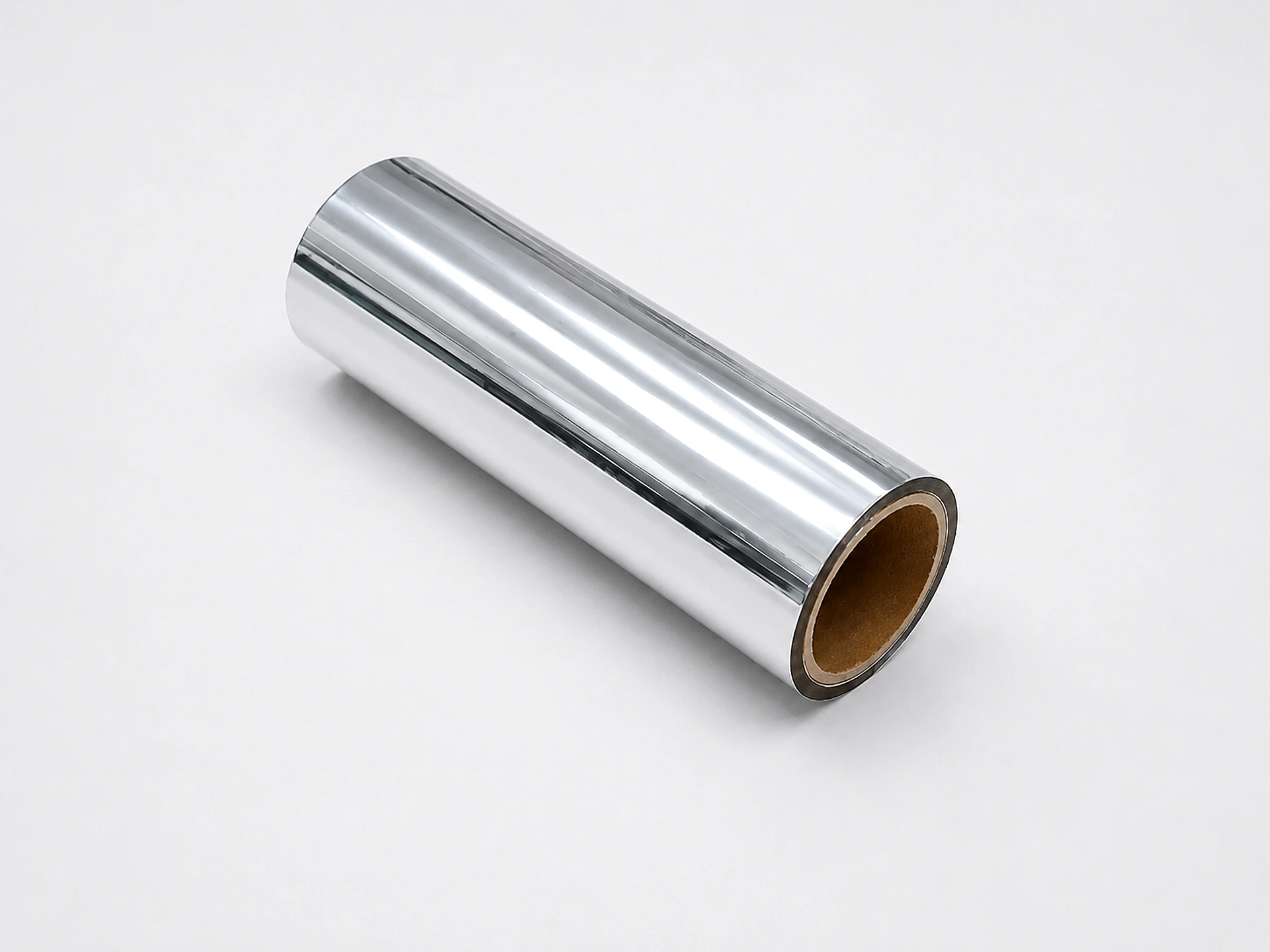
Silver Cold Foil
The reflective base used for CMYK metallic color builds. Printing process or spot colors over a silver transfer produces gold, bronze and coloured metallic effects without stocking a separate foil for each shade.
Cold foil rolls for sheetfed offset converters producing folding cartons, labels and premium commercial print. Match the foil to your press module, adhesive, substrate and overprint sequence before production.
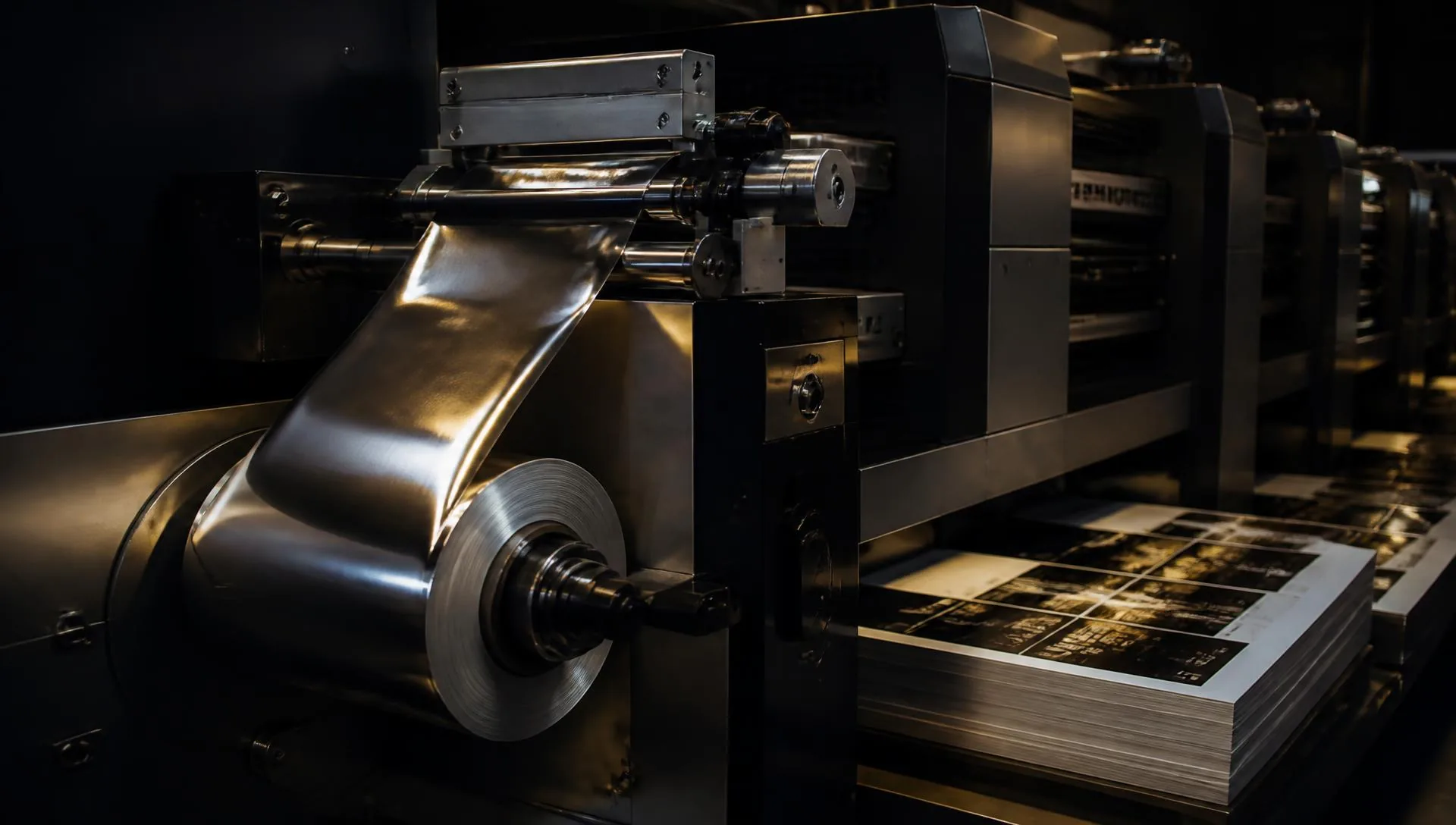
Sheetfed offset process
Cold transfer inline on sheetfed packaging and commercial presses.
Conventional, UV or LED-UV
Grade selection depends on the installed curing and adhesive system.
Slit-to-order foil rolls
Reel width, core and unwind direction confirmed against your module.
Press-trial support
Qualification protocol agreed before the trial roll is produced.
Cold foil is qualified as a system: press module, adhesive, substrate, artwork and finishing. The table below is the information CFS uses to shortlist a foil family for a sheetfed offset press before any material is produced.
| Qualification item | What the converter must provide | Why it affects foil selection |
|---|---|---|
| Press model and cold-transfer module | Press manufacturer, model, number of units and whether the cold-transfer module is factory-fitted or a retrofit. | Architecture decides where adhesive is printed, where the foil web runs and which release behaviour is appropriate. |
| Adhesive brand and curing method | Adhesive supplier, product code and whether curing is conventional, UV or LED-UV. | Release and adhesive must be matched as a pair; an untested combination is the most common cause of partial transfer. |
| Substrate and surface specification | Board or paper supplier, grade, coating, thickness and any barrier or recycled content. | Surface absorbency and coating chemistry change how much adhesive stays available at the nip. |
| Sheet format and foil web width | Maximum sheet size, image area and the usable foil web width across the module. | Determines slit width and how many lanes can be used to keep foil consumption efficient. |
| Reel core and unwind requirements | Core diameter, maximum reel diameter accepted by the unwind, and required unwind direction. | Reels must physically load and unwind correctly; the metallized side orientation is not interchangeable. |
| Target production speed | Intended running speed for the foiling job, not only the press maximum. | Dwell time at the nip affects transfer completeness and is confirmed during the press trial. |
| Metallic coverage and artwork detail | Percentage coverage, largest solid, smallest line and any reverse-out text. | Solids and fine detail have different transfer requirements and may point to different foil grades. |
| Overprint ink and coating system | Ink series, varnish or coating applied over the metallic area and its curing method. | Overprint adhesion depends on the foil surface and must be verified with your specific ink and coating. |
| Required finish and shade | Silver, gold family, champagne, holographic or another effect, plus any reference sample. | Shade and gloss level narrow the foil family before any technical qualification begins. |
| Approval and durability tests | The tests your customer requires — tape, rub, crease, fold or any brand-specific protocol. | Tests are agreed in advance so the trial produces evidence your approval process accepts. |
Final settings must be confirmed during a press trial. Values from another press, adhesive or substrate should not be copied without qualification. See the quote checklist and the cold foil adhesive guide for the supporting detail.
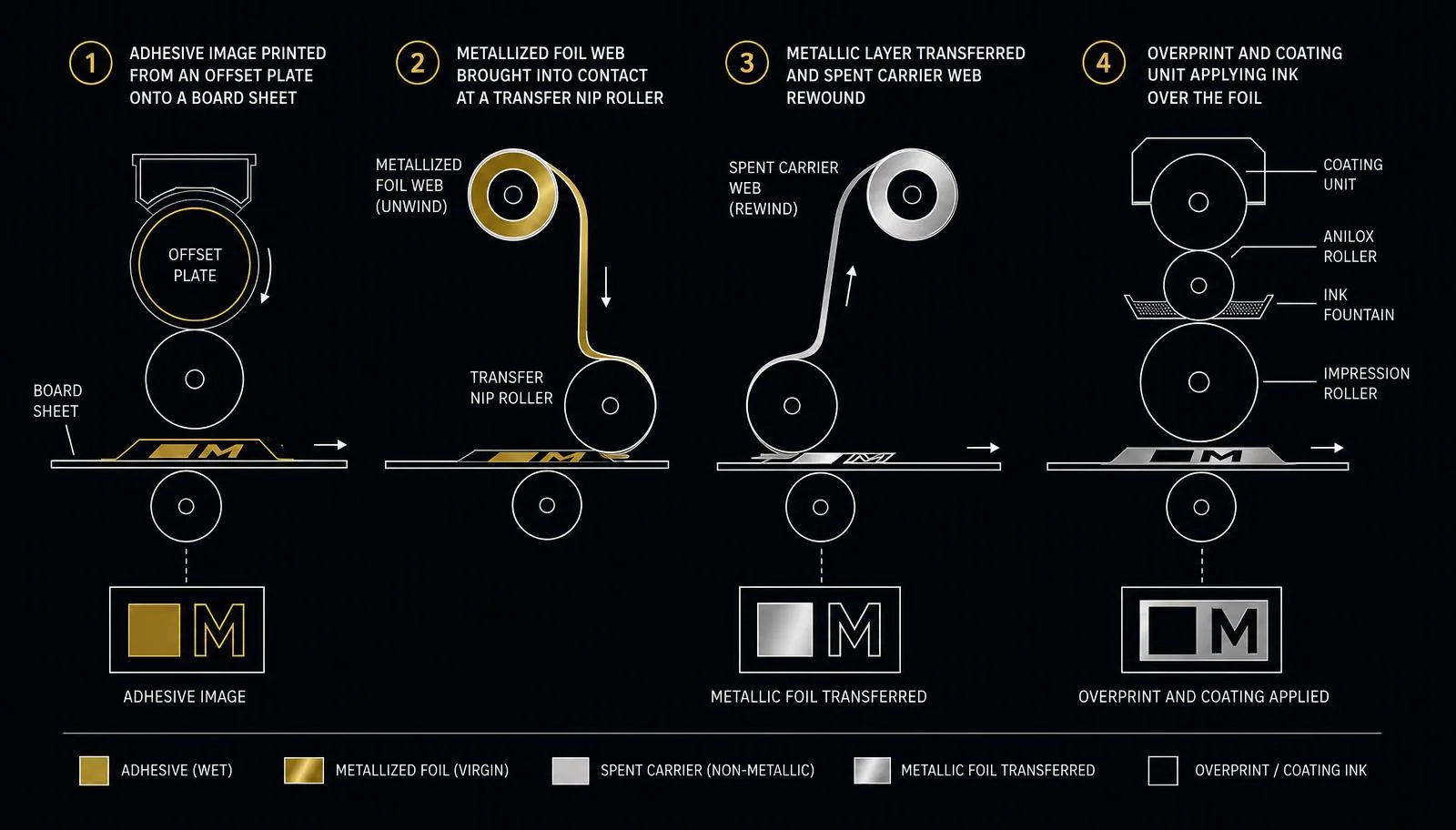
Step 1
The adhesive image is printed through an offset plate in the designated printing unit.
Step 2
The metallized carrier web is brought into controlled contact with the printed adhesive at the transfer nip.
Step 3
The metallic layer transfers to the adhesive image and the remaining carrier is rewound. The exact curing and separation sequence depends on the installed system.
Step 4
Process colors, spot colors, varnish or coating may be applied after transfer when the foil, ink and coating systems have been qualified together.
Sheetfed systems are not all built the same way. Module position, the point at which the adhesive is cured or set, and the separation geometry vary between manufacturers and between factory-fitted and retrofit installations. Do not assume that every offset system uses an identical UV-curing sequence — the working sequence for your press is established with your adhesive supplier and confirmed during qualification. For the underlying principle, see what cold foil stamping is, or review the hot foil vs cold foil comparison before choosing a process.
Four families cover most sheetfed offset programmes. Full technical data is available on each product page and in the current technical data sheet — request it with your enquiry.
The reflective base used for CMYK metallic color builds. Printing process or spot colors over a silver transfer produces gold, bronze and coloured metallic effects without stocking a separate foil for each shade.
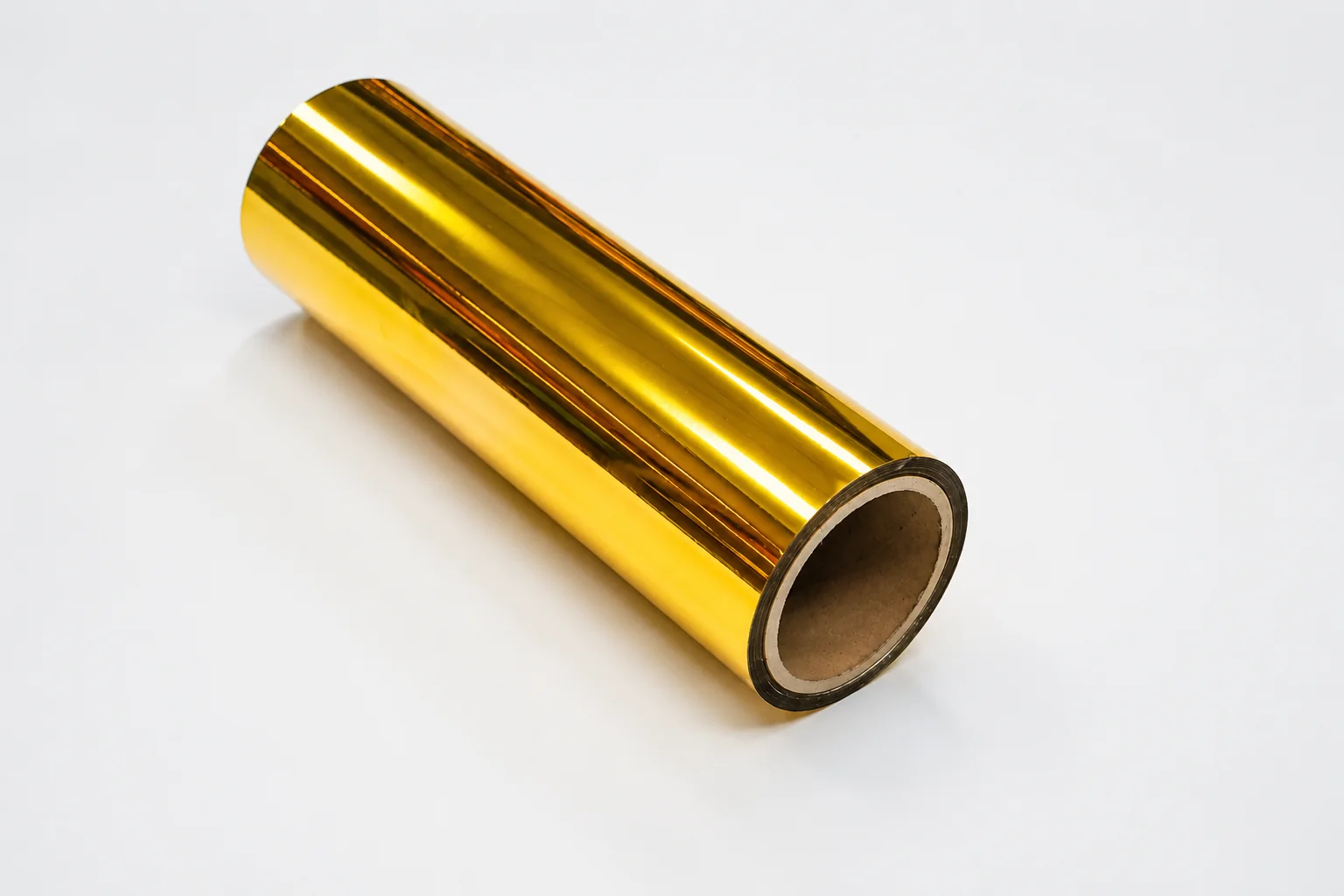
Specified for wine, spirits, cosmetics and premium cartons. Bright gold carries high-contrast shelf impact; pale gold suits restrained, editorial pack designs and lighter board shades.
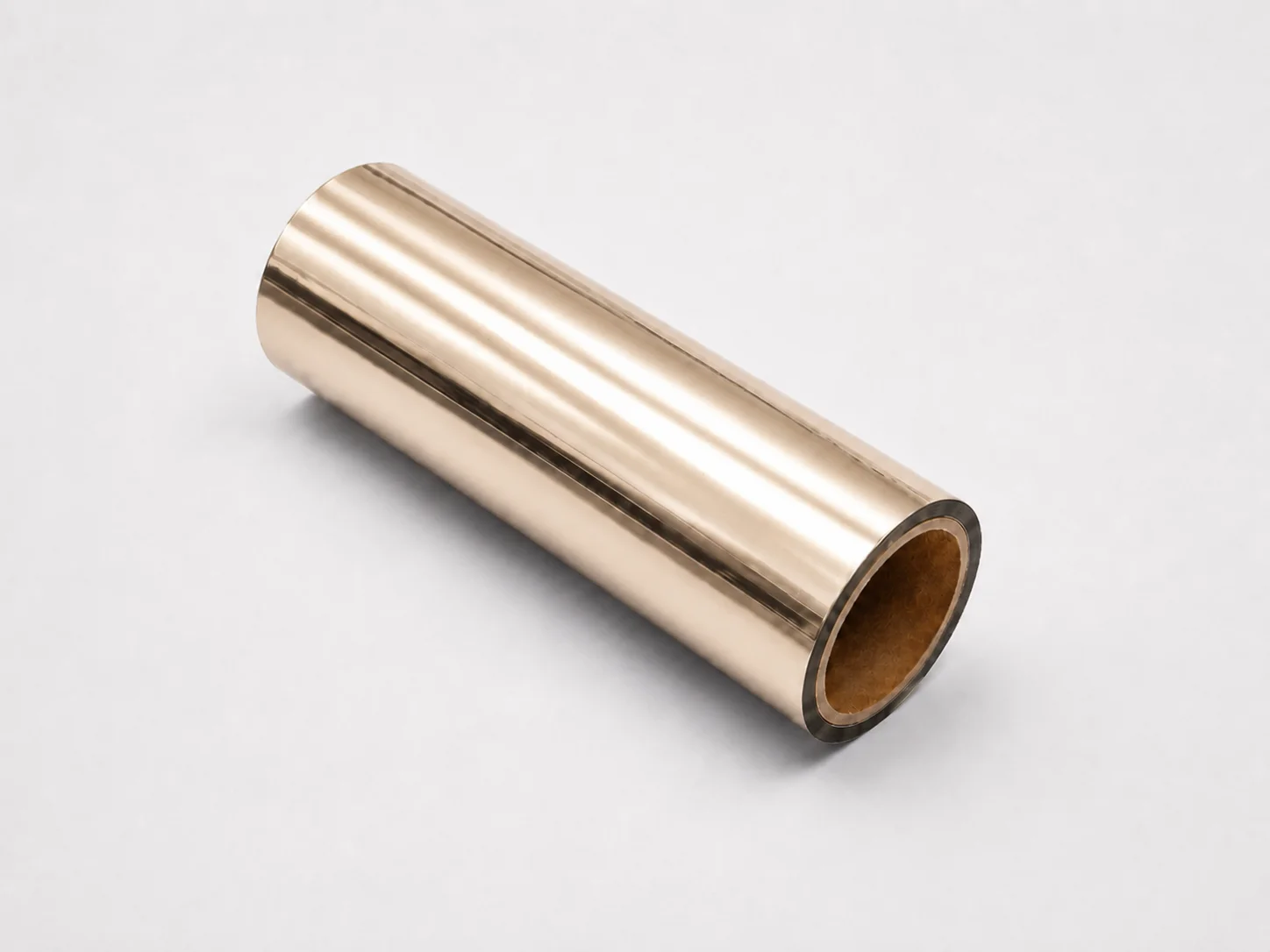
Used where a softer metallic shade is required — fragrance, skincare and gift packaging that would look overstated in bright gold. Shade matching is confirmed against your reference before qualification.
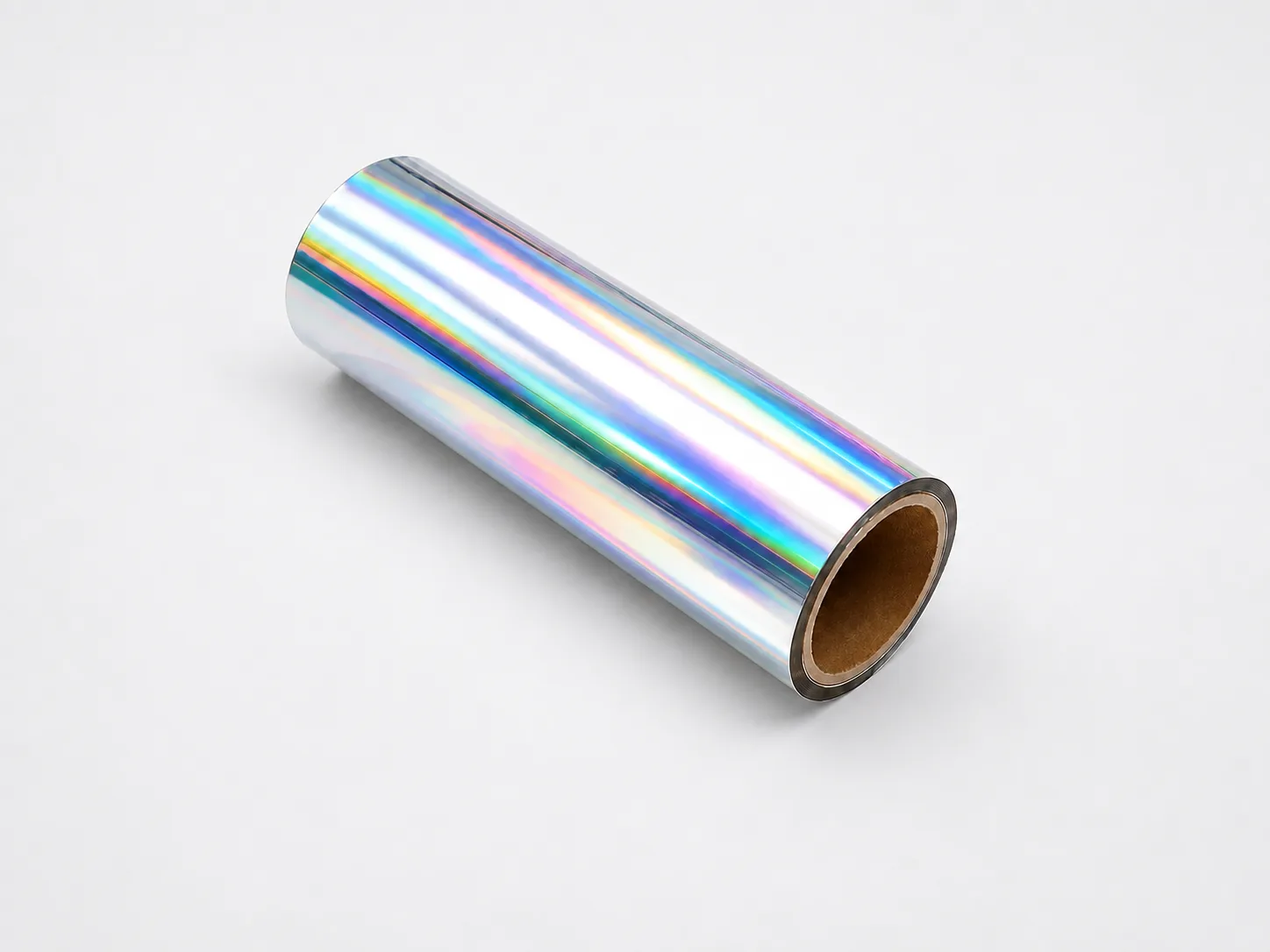
Decorative diffraction effects, and a visible feature that can form part of a wider authentication programme. Any security function must be defined with your own brand-protection specification.

Metallic panels and logos on carton board, overprinted and coated inline.
Soft golds, champagne and silver matched across primary and secondary packaging.
Labels and cartons where metallic detail and overprint depth carry the brand.
Controlled, repeatable metallic features within a documented approval process.
Covers, brochures and gift items produced on sheetfed equipment.
Sheet-printed label work finished with cold transfer instead of an offline pass.
Where a visible authentication element is part of the brief, review anti-counterfeit cold foil applications before selecting a holographic grade.
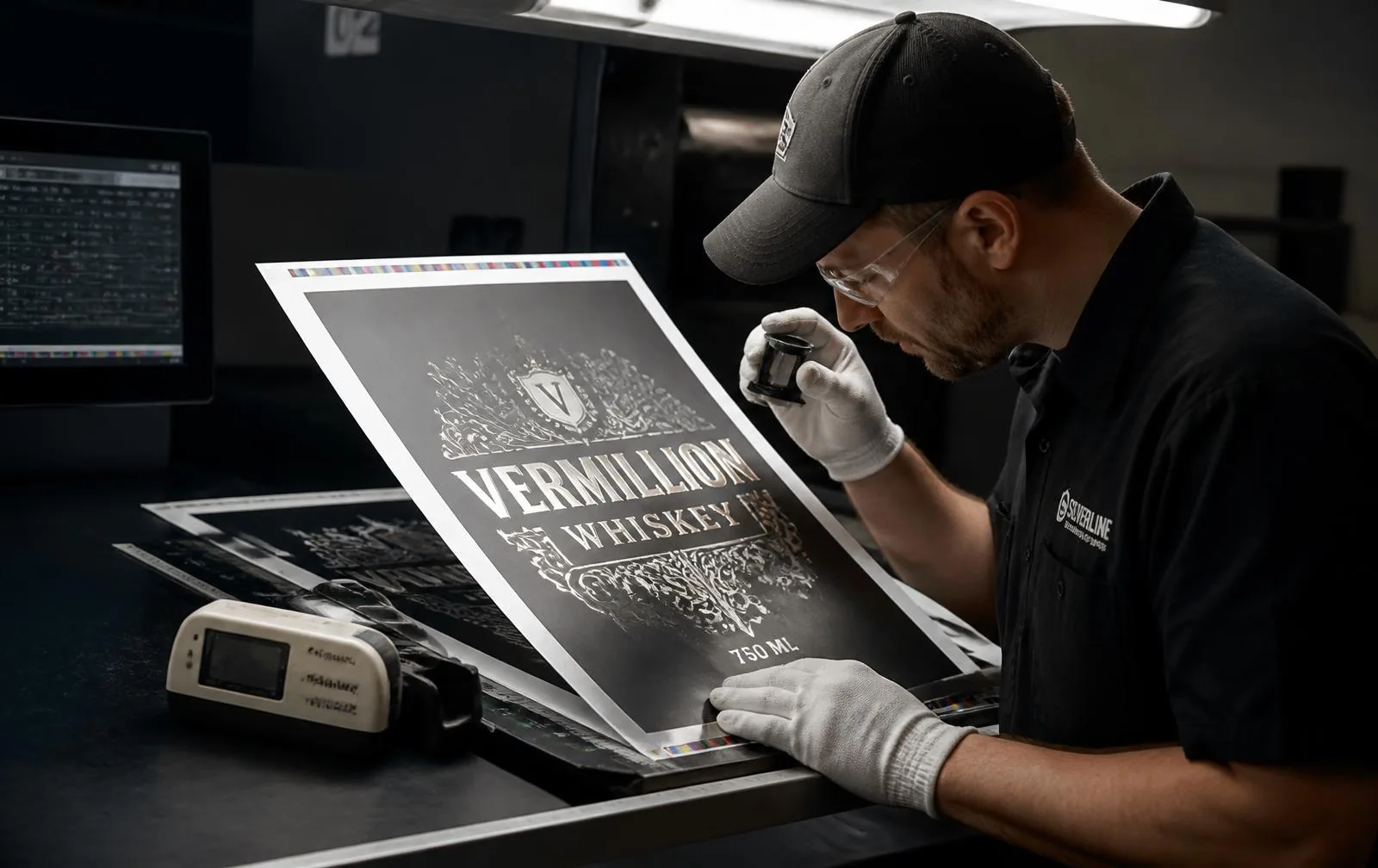
Press brands such as Heidelberg, Komori, Koenig & Bauer or manroland are useful only as a description of the equipment you are running; they are not a statement of verified CFS compatibility. The full quote checklist lists the same information in enquiry order.
Send My Offset Press SpecificationsUse these as diagnostic starting points, not as machine settings. Change one variable per trial so the result stays attributable.
| Symptom | Variables to check first | Next trial action |
|---|---|---|
| Dull or uneven metallic finish | Confirm adhesive coat weight consistency, substrate smoothness and whether the reel surface was damaged in handling. | Re-run a short strip with a single variable changed and compare gloss against the retained reference sheet. |
| Incomplete transfer in solid areas | Check adhesive film continuity across the solid, nip contact across the sheet and the curing state before the nip. | Qualify one adhesive setting at a time; do not change foil grade and press settings in the same trial. |
| Weak fine lines or reverse text | Confirm plate imaging of the adhesive form, adhesive spread on the substrate and the smallest detail actually held. | Test a detail step-wedge to establish the reproducible minimum on your press and substrate. |
| Contamination or unwanted metallic particles | Check for adhesive misting, static on the sheet, dust in the delivery and carrier-web debris near the nip. | Clean the transfer area, verify static control, then re-run a short trial before adjusting materials. |
| Poor overprint or coating adhesion | Confirm ink and coating chemistry over metallized surfaces, cure state and the interval between transfer and overprint. | Run a tape and rub test on the overprinted area and qualify the ink or coating with the same foil grade. |
| Registration drift | Check sheet transport, module timing and whether drift appears only on foiled sheets or across the whole run. | Isolate mechanical from material causes before requesting a foil change. |
| Foil wrinkles or unstable web tracking | Confirm reel condition, unwind tension stability, roller alignment and whether the reel core matches the shaft. | Reload with a fresh reel and re-check tracking at a reduced speed, then step back up. |
Step 1
Send press and job specifications
Step 2
CFS reviews foil and process compatibility
Step 3
Agree on the trial roll format
Step 4
Run transfer, overprint and durability checks
Step 5
Confirm the production specification and quotation
Both routes transfer metal from a carrier web using a printed adhesive. What differs is the production format and the qualification data required.
| Criterion | Sheetfed offset | Narrow web flexo |
|---|---|---|
| Print format | Sheetfed sheets on a packaging or commercial press | Continuous web on a narrow web press |
| Adhesive application | Printed from an offset plate in a dedicated unit | Printed through a flexo plate with an anilox roller |
| Substrate profile | Carton board and heavier paper grades | Label face stocks, coated paper and films |
| Production format | Sheet size and image area drive foil width | Web width and repeat drive foil width |
| Common applications | Folding cartons, cosmetics, spirits, premium commercial print | Pressure-sensitive labels, sleeves and film labels |
| Information required for qualification | Press model, module, adhesive, board grade, sheet format, overprint | Press model, web width, adhesive, face stock, curing system, speed |
External sources are cited for process context only. Reference to a press manufacturer or material supplier does not imply endorsement of CFS or verified compatibility with CFS foils.
Send your press, module, adhesive, substrate and finishing details. We will use them to shortlist the appropriate foil family and define the information needed for a controlled press trial.